
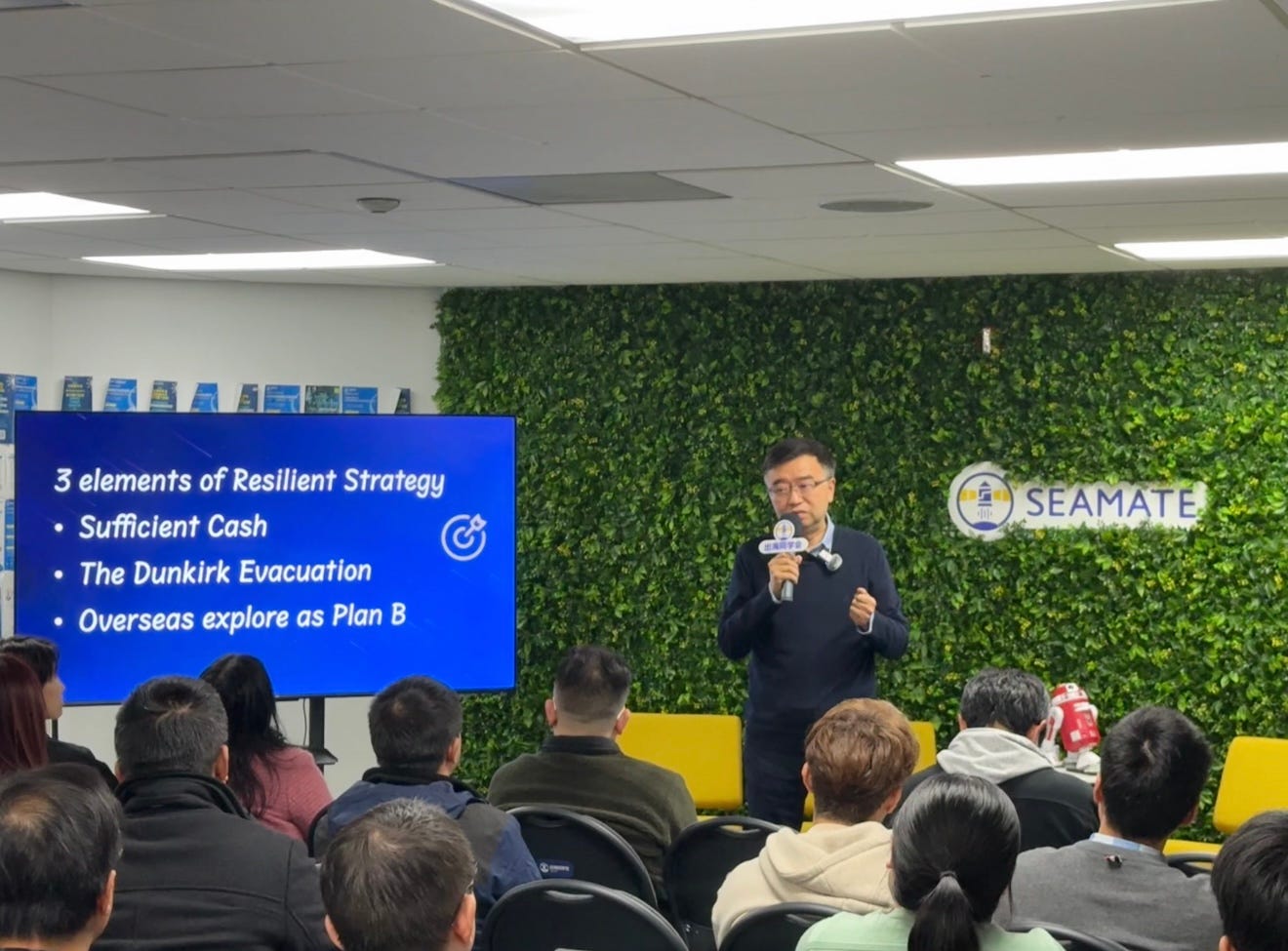
On December 19, Walnut AI and Seamate co-hosted “Seamate Crazy Thursday: 2025 Founder Retro & Mixer,” an event designed to bridge the gap between early-stage ideas and global scale.
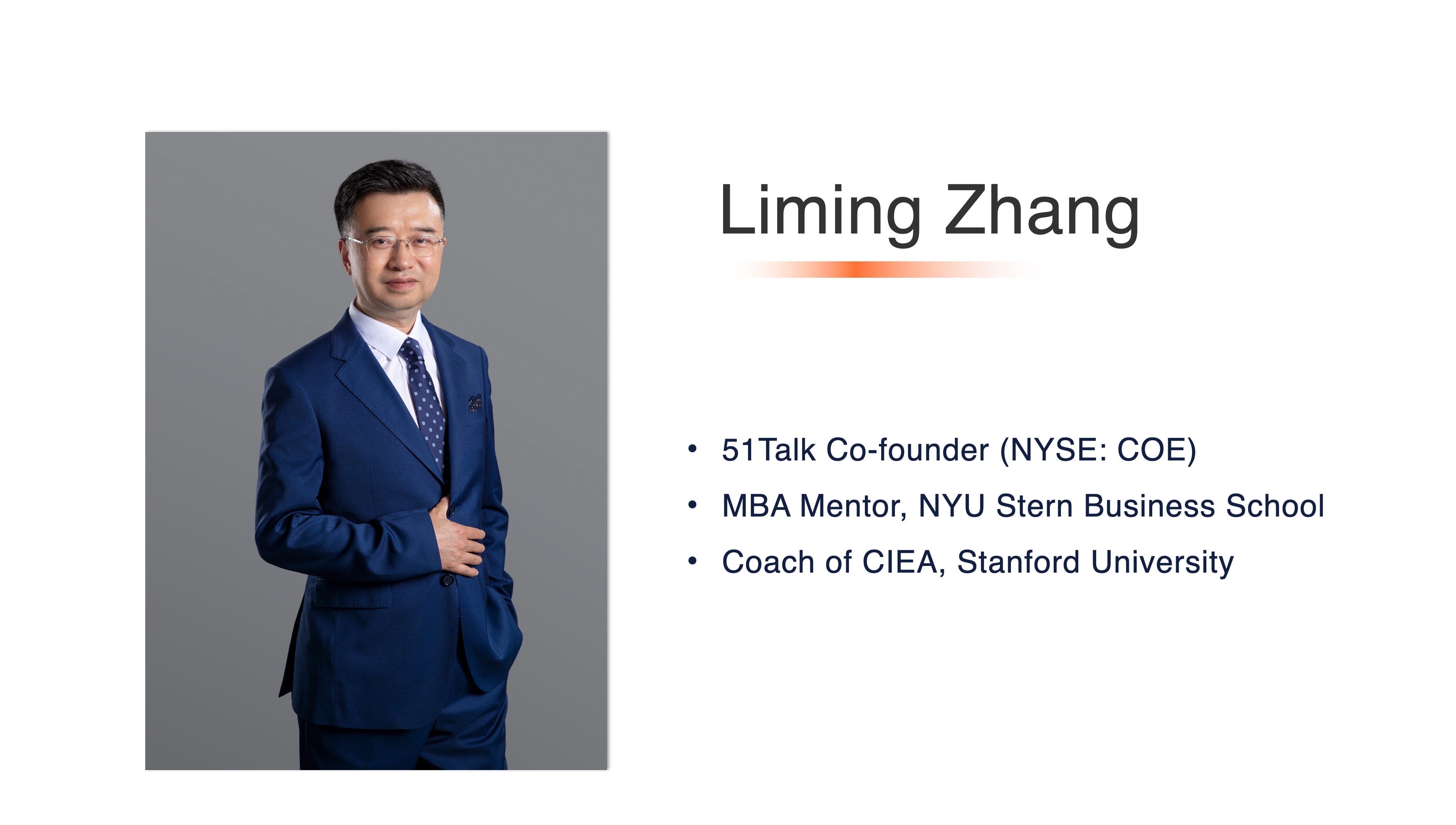
The highlight of the evening was a keynote by Liming Zhang, Co-founder of 51Talk (NYSE: COE), an MBA Mentor at NYU Stern, and a Coach at Stanford University’s CIEA. Drawing from over two decades of experience, Liming shared the raw, unvarnished truth about building a company that survives market crashes and policy shifts to reach an NYSE IPO.
Entrepreneurship is rarely the polished, linear success story we see in headlines. Even for those who eventually lead a company to a multi-billion dollar exit, the journey often begins in a state of total confusion. Many founders start out lost, pitching a vision to investors and partners that they themselves are still trying to understand. The following insights serve as a masterclass in scale, resilience, and the internal battles every leader must win to survive.
Tip 1: Stay in Day 1
The phrase “Stay Day 1” is easy to say but incredibly difficult to live. The greatest trap for any startup is the Funding Trap. When you secure major rounds from top-tier firms like Sequoia or DCM, it is easy to become arrogant and stop acting like a lean startup. Success creates a dangerous comfort zone, and the “Day 1” mindset is an intentional battle against that natural human tendency toward pride. To truly scale, you must force yourself to stay hungry and humble even when investors are lining up at your door.
Tip 2: Corporate Culture
Startups cannot compete with tech giants on high salaries or fancy offices. The only thing a startup truly owns is its mission. Because you lack the perks of a big corporation, you must attract people who identify with the value you bring to society. However, culture is not a list of values on a wall; it is a living narrative. You must propagate your mission constantly in every meeting and every trip until you believe it from the bottom of your heart.
A powerful example from 51Talk’s history is the story of a terminally ill teacher in the Philippines who insisted on teaching because she did not want her students to “miss her” once she was gone. When your every employee believes in the mission that deeply, the founding team has no excuse to work any less.
Tip 3: Resilience
An egg drops and breaks—that’s fragile. A paper ball drops and doesn’t break—that’s just “durable”. Only a ping-pong ball drops and bounces back higher. That’s resilience. In business, this means turning a crisis into an opportunity for growth.
Strategy 1 - Maintain a Massive Cash Reserve: Financial discipline is survival. While others were investing surplus cash into real estate during the boom years, 51Talk held onto a reserve of over $230M. This allowed the company to survive “black swan” events that killed nearly all of their competitors.
Strategy 2 - The Dunkirk Evacuation: Many companies die because they only know how to attack. When the market shifts, you must know how to retreat without collapsing. If a retreat is handled poorly, it becomes a total collapse where you lose your best talent and assets.
Strategy 3 - Overseas Explore as Plan B: You must explore new markets and alternative plans while your company is at its most vibrant stage. Liming’s team began exploring overseas market expansion a year before major domestic policy shifts happened; you cannot wait until the disaster is already at your door to start looking for an exit.
Tip 4: Focus on Your Core Competency
It is tempting to pivot your product just because a competitor looks more “premium.” At one point, the board pressured 51Talk to abandon their Filipino teacher model for a North American one to match rivals. However, the data told a different story. North American teachers suffered from time-zone fatigue and taught far less frequently. Filipino teachers taught 15 lessons a month compared to the competition’s six. In online education, high frequency is the real driver of learning quality. By sticking to the logic that worked for their specific model rather than chasing prestige, they maintained a 75 percent gross margin and built a more effective platform.
Tip 5: Self Development
An enterprise can only grow as fast as its leader grows. As a company scales from 0 to an IPO, the bottleneck is rarely the market or the technology; it is the founder’s self-reflection and personal evolution. If you do not push yourself to grow, your company will stall. To evaluate your leadership, you must ask yourself two soul-searching questions: Do your employees truly want to stay with you, and do they actually want to become the type of leader you are? If the answer to either is no, your personal growth is the missing link in your company’s scale.
As we look toward a future dominated by AI and global competition, these pillars remain more relevant than ever. Whether you are navigating low-moat industries where speed is your only weapon or managing the high API costs of a new AI venture, remember that talent density must always exceed business complexity. If you can move faster than the market without creating internal friction, your DNA will naturally grow to meet the needs of the business. Scale is not just about a growing user base; it is about the resilient, mission-driven foundation you build today.
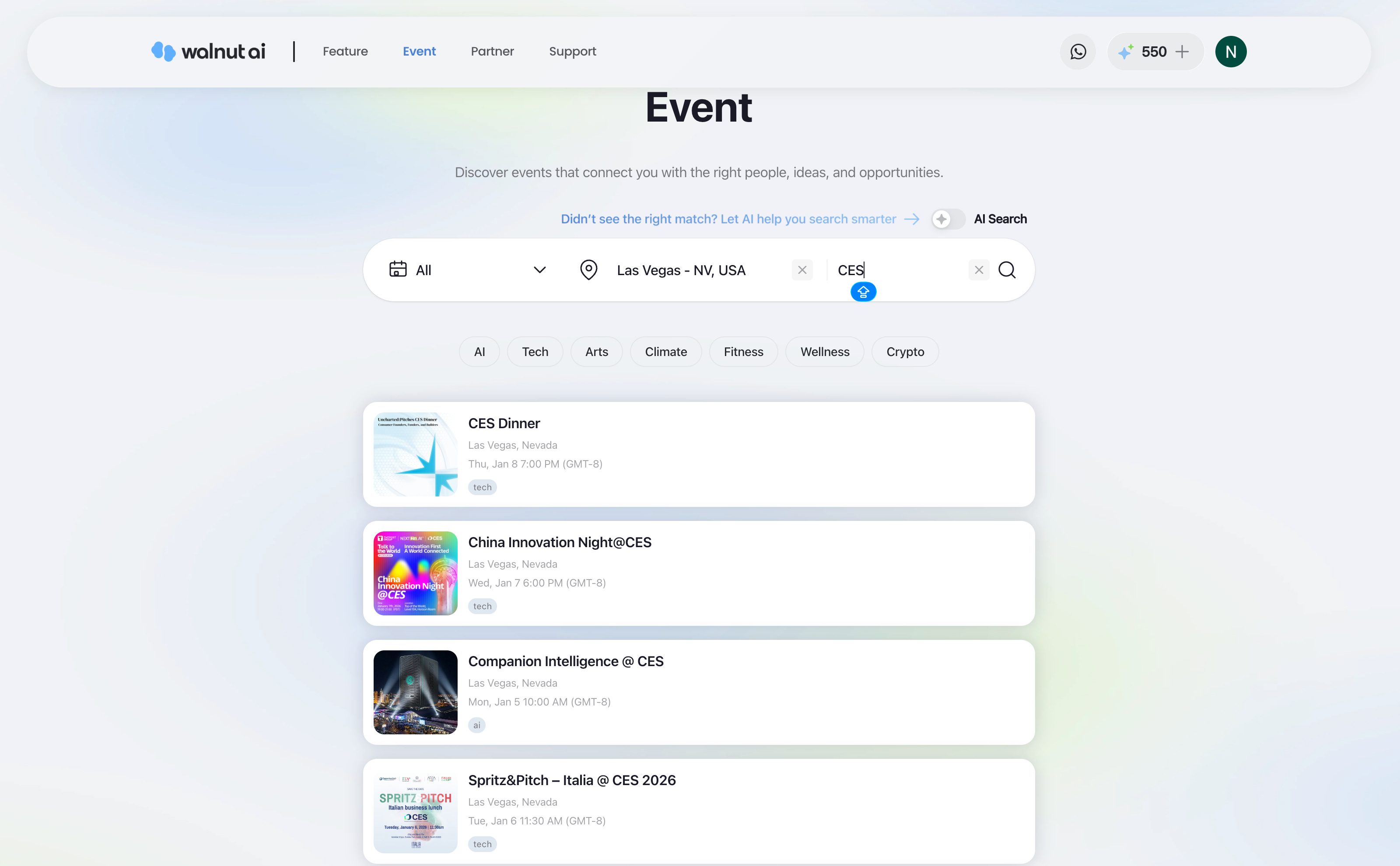
Walnut Smart Event Search
While things are winding down for the Christmas break, the post-New Year rush is fast approaching! CES is just around the corner, and the calendar is already packed with high-value side events. Use Walnut Smart Event Search to explore over 50 CES events and networking opportunities!
👉 Check here: https://walnut.ai/events (invitation code: test02)
“Stay Day 1” basically means don’t let funding make you fat. Cash and humility beats hype 😅💰